

My son graduates from IB school in March, turning 19 (we lost 1 year due to War in Ukraine). The dilemma: spend €200,000+ on European education or buy him an apartment?
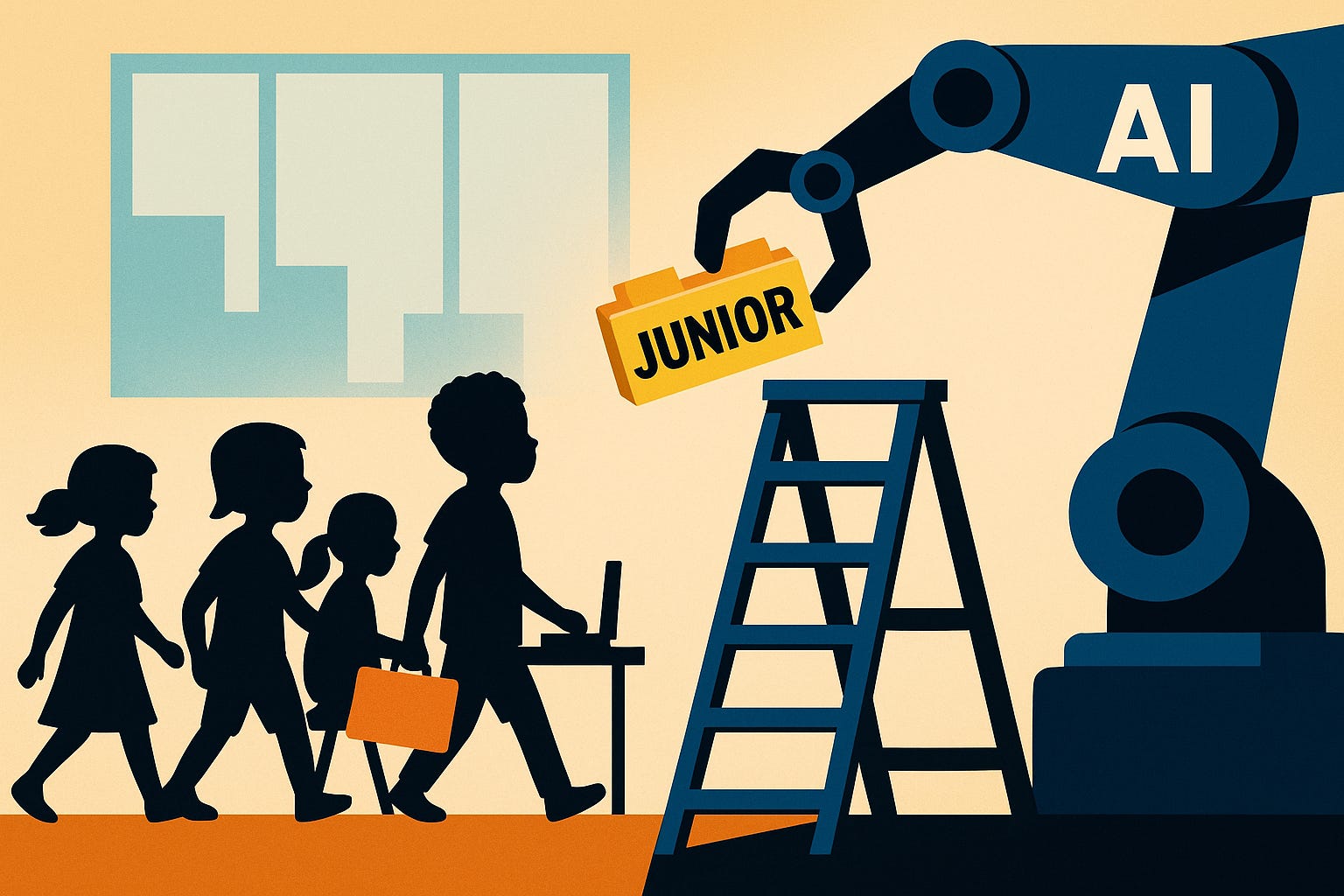
The Harsh Reality of 2024
The data is alarming: graduate unemployment up 15%, entry-level applications up 30%, Big Tech cut graduate hiring by 25%.
AI targets exactly what newcomers do:
Junior lawyers aren’t needed — AI analyzes documents in minutes
Junior developers replaced by Claude Code and similar tools
Junior analysts displaced by AI research instruments
Geoffrey Hinton: “A good bet would be to be a plumber.”
Dario Amodei (Anthropic): AI will eliminate half of entry-level white-collar positions within five years.
We’re Breaking the Career Ladder
By implementing AI, we create a paradox:
1. Removing the bottom rung — positions where you learn the profession
2. Breaking the growth path junior → middle → senior → executive
3. Eliminating experience — how do you grow experts without practice opportunities?
Bloomberg found AI can replace 53% of marketing analyst tasks and 67% of sales manager work. But for their supervisors — only 9% and 21%.
Vicious circle: we need experienced professionals but don’t give young people the chance to gain experience.
The Cost of Our Mistake
€200,000 on education equals an apartment price. What’s the better choice: diploma plus 20-30 years of mortgage payments or apartment plus immediate housing security?
It’s unclear whether universities will teach working with new tools when the world will change dramatically during 4-5 years of study.
Alternative Path
Perhaps we should reconsider the traditional model: start with real estate (security), then practical skills (chef, craftsman), parallel development through self-funded learning.
What’s the Solution?
We face a dilemma: continue implementing AI and deprive youth of opportunities, or find a balance between automation and human development.
Critical questions:
How do we preserve learning positions for young professionals?
Should we rethink higher education?
Which professions remain AI-protected?
By implementing AI today, we risk cutting tomorrow’s talent off from intellectual professions.
What’s your take on Generation Z career prospects?