

The sharpest CMO you know has a locked Facebook profile. The founder who built a $50M company shares nothing publicly except occasional conference slides.
This isn’t burnout. It’s a strategy.
And if you’re still publishing your best thinking into the open, you might want to understand what they already figured out.
The meadow that was
In Liu Cixin’s novel The Dark Forest, the universe isn’t empty — it’s silent. Every civilization that broadcasts its existence gets destroyed. Not out of malice, but pure game theory: if even one out of five observers decides you’re a threat, you’re done. So everyone hides.
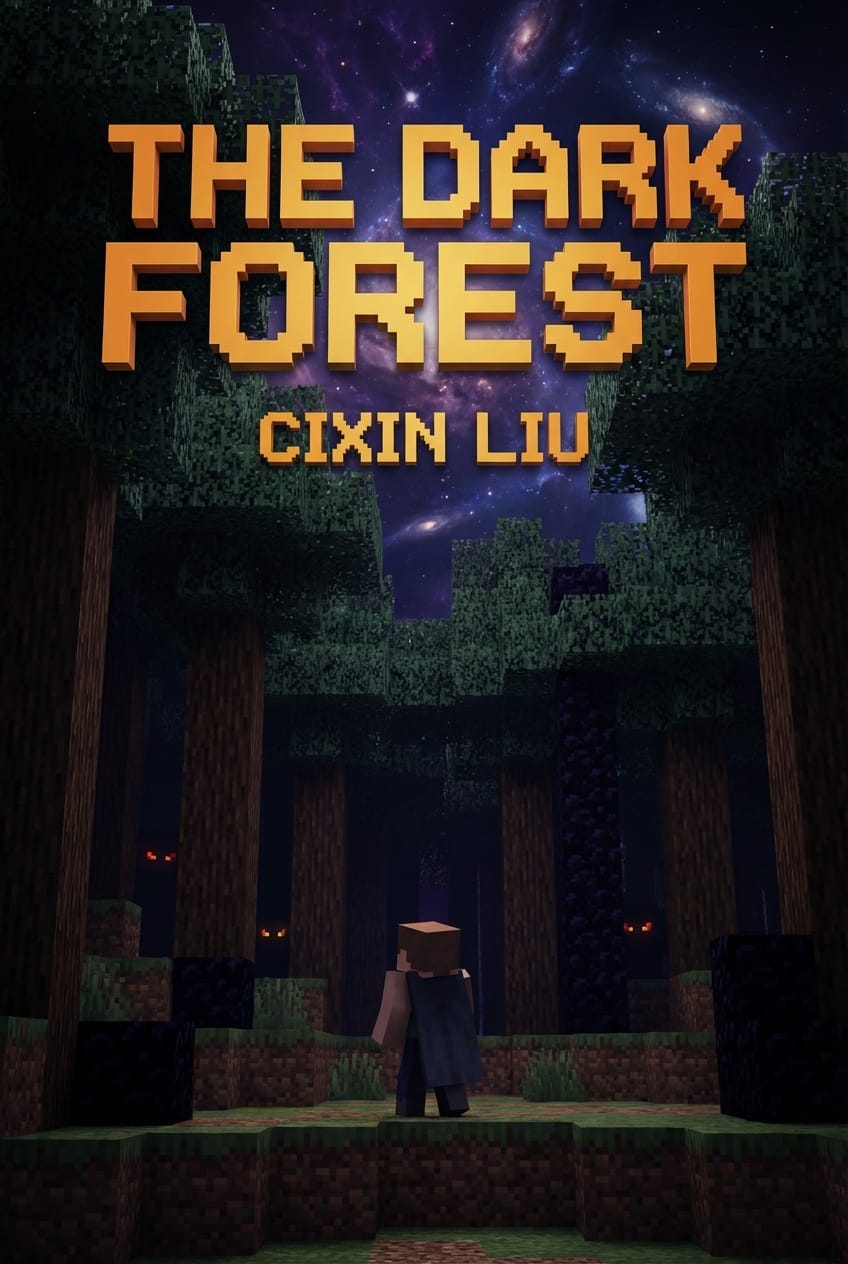
The early internet was the opposite of that. It was a bright meadow where broadcasting your presence was the optimal move. More connections meant more value. More sharing meant more opportunity.
I lived this. For seven years, I ran content operations that produced roughly 14,000 articles — all written by hand. Me personally, plus team’s content. Reviews, guides, analysis across dozens of sites. No investors. No permission from anyone. No editorial board. Just ideas and execution. At peak, we reached 32 million monthly unique readers.
Sharing was rational because execution was the moat. Anyone could have my ideas. Nobody could replicate the output. The cost of copying 14,000 manually written articles was... seven years of work.
That math no longer holds.
The forest gets dark
Two things changed simultaneously, and the combination is what matters.
First, the open web consolidated. The spacious meadow shrank into a handful of platforms controlled by companies whose business model is extracting your signal and selling it as targeting data — or by governments interested in the same signal for different reasons.
Second, AI made execution cheap.
Before LLMs, a competitor couldn’t just absorb your idea and ship it. Ideas needed people, people worked in physical time, and physical time doesn’t scale. Your moat was real.
Now, a platform that helps you brainstorm, code, and write already owns the compute, the models, and — critically — the aggregate demand signal. It doesn’t need to read your specific prompt. It sees where the questions cluster. A gradient in idea space. A map of where human interest is moving.
The platform knows your idea is pregnant before you do.
Copying 14,000 articles today costs a week and a $500 API bill. The moat evaporated.
The predator isn’t who you think
In Cixin’s forest, civilizations hide from each other — from hunters. In the cognitive dark forest, the most dangerous actor isn’t your competitor. It’s the infrastructure itself.
You publish a framework for thinking about retention. Within months, it’s training data. Your unique angle becomes the median output of every AI writing tool. Your differentiation dissolves into the average.
And here’s the recursive trap: trying to outinnovate the system only feeds it. You think outside the box, you publish that thinking, and the box gets bigger. Your resistance isn’t suppressed — it’s absorbed.
This is why the smartest people are going quiet. Not because they have nothing to say. Because they’ve run the game theory and the math doesn’t favor broadcasting anymore.
The closed-account phenomenon
Watch the behavior pattern: a CMO with two decades of experience maintains a minimal LinkedIn presence and a completely locked personal Facebook. A successful founder shares nothing about their actual network, partnerships, or strategic thinking. They broadcast the social role but hide the real signal.
This isn’t paranoia. It’s the same asymmetric risk calculation from the novel. If five entities observe your signal — recruiters, AI scrapers, competitors, governments, random opportunists — and four of them do nothing, the fifth one might use it against you. The expected cost of broadcasting exceeds the expected benefit.
People are splitting into two layers: a public facade of carefully curated professional content, and a private layer of actual relationships, real ideas, and genuine strategic thinking. The facade feeds the forest. The private layer is where value actually lives.
What this means for anyone who creates content
If you’re a marketer, a founder, or anyone whose job involves putting ideas into the world, you’re facing a real strategic question. Not “should I create content?” but “what kind of signal should I broadcast?”
Here’s what I learned from 14,000 articles and watching the meadow become a forest:
The moat moved. It’s no longer execution speed or content volume. It’s taste, curation, and the relationships your content builds. AI can write the text. It cannot build the trust that makes someone open your newsletter instead of the other 40 in their inbox.
Publish frameworks, not secrets. Opinions and worldviews are hard to absorb into a model in useful ways. “Here are 10 tactics for retention” gets commoditized instantly. “Here’s how I think about retention and why most frameworks miss the point” — that’s stickier.
Your real network is your real asset. Build it in private channels. DMs, small communities, one-on-one relationships. The public content is the storefront. Don’t confuse it with the warehouse.
Don’t stop publishing. Change what the signal carries. The mistake is either going fully silent (you lose the storefront) or publishing everything (you feed the forest your best ideas for free). The move is to publish enough to attract, and keep the high-value thinking for contexts where you capture the value.
The recursion
This article is itself a signal in the dark forest. By describing the dynamic, I’m feeding it to the system I’m warning you about. The models will learn a little more about why people hide.
I wrote it anyway. Because silence isn’t a strategy — it’s a surrender. The real strategy is to speak in a way where the value stays with you and your audience, not with the forest.
The meadow is gone. But you don’t have to be prey.
You just have to stop pretending it’s still a meadow.