

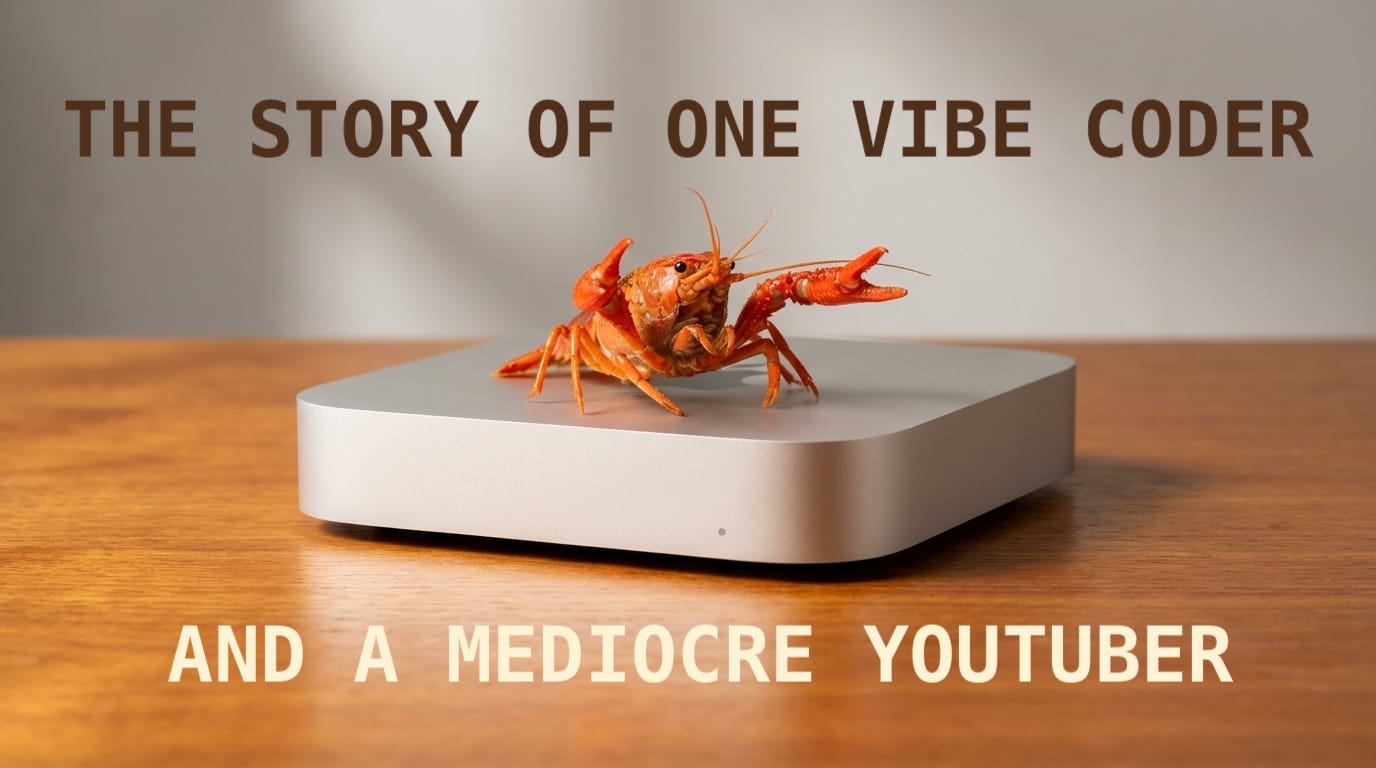
Jensen Huang said that in March 2026 at the Morgan Stanley TMT Conference. He was talking about OpenClaw — an open-source personal AI agent framework that went from 0 to 309,000 GitHub stars in four months. He noted that Linux took 30 years to reach comparable adoption. OpenClaw did it in three weeks.
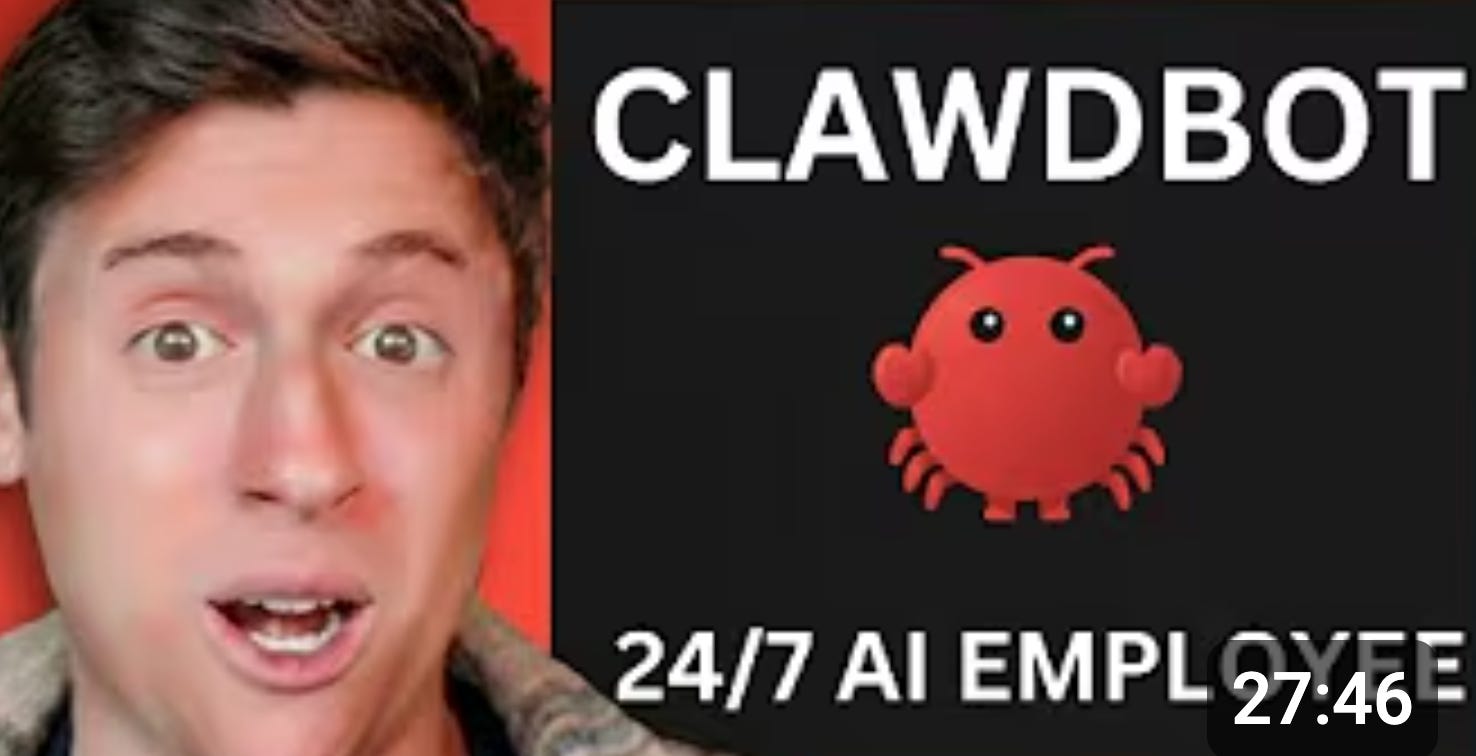
The person who built it: Peter Steinberger, creator of PSPDFKit, coding on a laptop. The person who lit the match: Alex Finn, a YouTuber with under a million subscribers. The video title: “ClawdBot is the most powerful AI tool I’ve ever used in my life.”
That’s the setup. Here’s what happened next.
The match
January 24, 2026. Alex Finn posts a tutorial. 964,000 views, 29,000 likes. Not a big channel by YouTube standards. But the video had one specific ingredient: a section at 5:42 called
“Do you need a Mac Mini?”
That timestamp created a narrative. Not “here’s a software tool.” Instead: “here’s a reason to buy a $500 piece of hardware and turn it into an always-on personal AI server.” The Mac Mini M4 — quiet, 6–12 watts, sitting on your desk — became the physical home for something that previously lived only in the cloud.
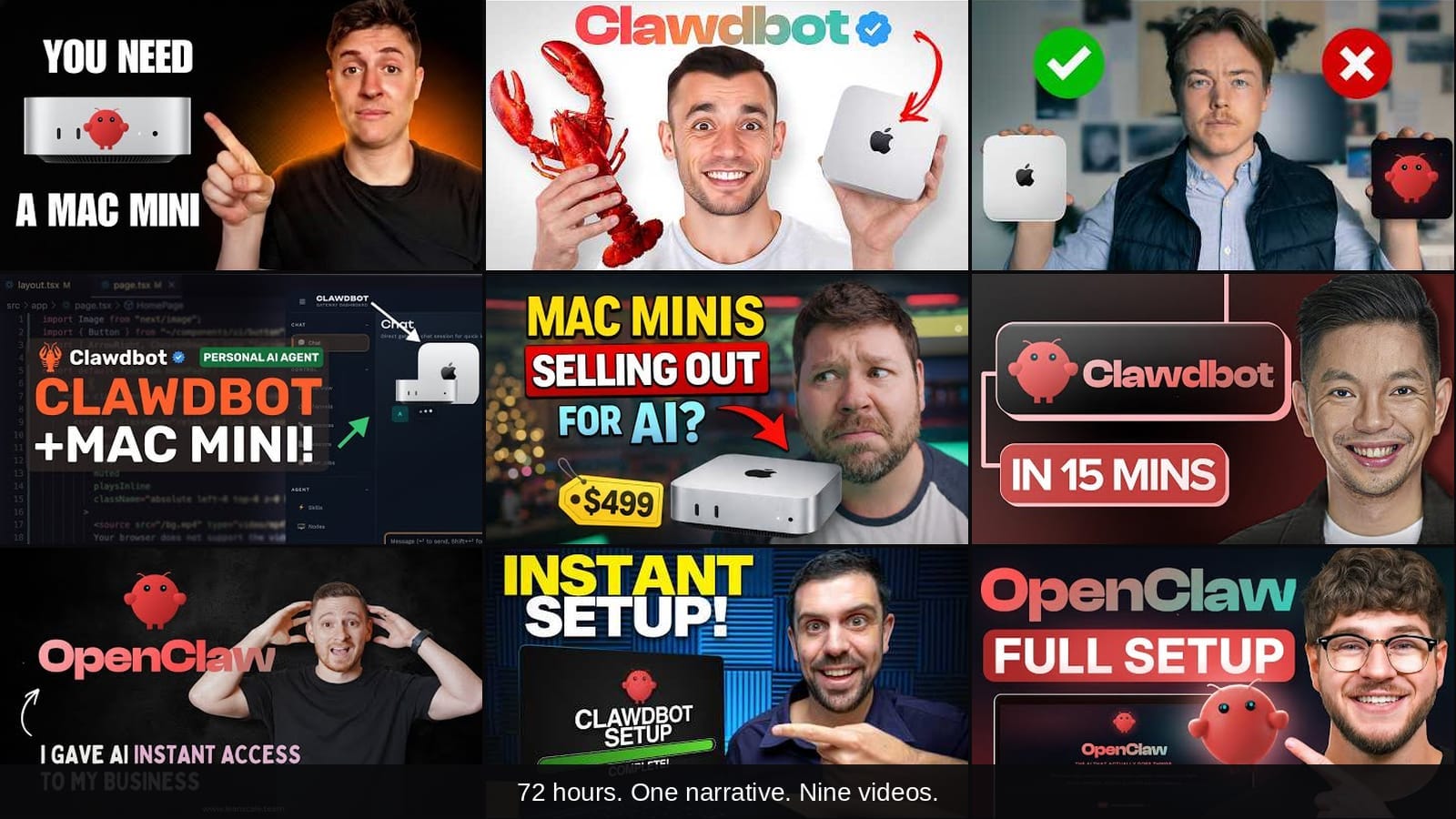
Within 72 hours, five other channels published tutorials with the same format: “I bought a Mac Mini for this.” The genre existed before the tools to fill it. OpenClaw gave it content.
January 30: Fireship covers it. 1.8 million views. The rebrand to “OpenClaw” happens the same day.
February 12: Lex Fridman episode #491 with Steinberger. Title: “Viral AI Agent that Broke the Internet.” 1 million views. This is no longer a developer product — it’s mainstream.
By this point, the project is gaining 25,000 GitHub stars per day. Total ecosystem around it: 5,400+ community-built skills, a dedicated skills repository at 36,000 stars. Cloud providers scrambling — Scaleway launches managed Mac Mini M4 instances specifically for OpenClaw. Lightning.ai offers one-click deployment. Useclawy.com offers a $99 lifetime hosted option with “no Mac Mini needed.”
The “no Mac Mini needed” narrative exists as a direct response to a Mac Mini demand spike that nobody planned.


What the industry did next
February 15: Steinberger announces he’s joining OpenAI. He notes that both Zuckerberg and others reached out. He chose OpenAI.


Read that again. The creator of a product that went viral in January gets calls from Meta’s CEO by February. He joins the most valuable AI company in the world the following week.
OpenClaw itself moved to an open-source foundation. The project didn’t disappear — it accelerated.
February 24: Notion launches Custom Agents v3.3. Up to 20 minutes of autonomous operation. Claude Opus, GPT-5.2, Gemini as model options. 21,000 custom agents created by early testers. 2,800 running continuously.
February 27: Perplexity launches “Perplexity Computer.” A cloud-based agentic system unifying 19 AI models, running autonomous agents in isolated environments for hours. $200/month. Press coverage explicitly describes it as “Perplexity’s own OpenClaw.”
They’re not even pretending it’s unrelated.
Meanwhile, Meta acquired Manus — a Singapore-based autonomous agent startup — for over $2 billion in late 2025. Manus scored 86.5% on the GAIA benchmark versus OpenAI’s 74.3%. It’s now being absorbed into Meta AI across Facebook, Instagram, WhatsApp, and Messenger.

Google has Project Jarvis. Microsoft has Copilot Pages with “digital coworkers.” Apple is positioning Intelligence 2.0 as Siri-as-personal-agent. On March 10, Tencent launched QClaw — a WeChat-integrated clone. 1,000 users queued on day one.
The entire personal AI agent category went from “interesting developer experiment” to “everyone’s core product roadmap” inside 60 days.
The Anthropic irony
Here’s the detail worth pausing on.
The model that powers OpenClaw is Claude — built by Anthropic. Most OpenClaw users are running their agents on Anthropic’s infrastructure.
Anthropic has no consumer-facing agent product. No OpenClaw equivalent. No personal AI framework. Their computer use capabilities exist at the API level for developers.
They built the engine. Someone else built the car. The car sold 309,000 units in four months, triggered a $2B acquisition by Meta, recruited the creator to OpenAI, and forced every major tech company to accelerate their agent roadmap by at least a year.
Anthropic gets the API revenue. The narrative belongs to someone else.
What this is actually about
This is a story about how viral software works in 2026, but it’s also a story about something older: the power of a concrete narrative over an abstract capability.
AI agents existed before OpenClaw. OpenAI had them. Anthropic had computer use. Google had project-level assistants. The technology was available.
What OpenClaw had — specifically, what Alex Finn’s video created — was a physical anchor. A $500 device you could buy on Amazon, plug in, and point at a piece of software. “You own this. It runs on your hardware. It works while you sleep.” That’s not a feature. That’s a story.
The Mac Mini wasn’t marketed as an AI server. Apple didn’t plan this. A YouTuber with under a million subscribers created the use case by describing it clearly at timestamp 5:42.
Then Fireship made it credible. Then Lex Fridman made it mainstream. Then Jensen Huang made it historic. None of this required a marketing budget. It required one person to describe something concretely enough that other people could imagine themselves doing it.
The uncomfortable question for everyone building AI products
Every company on this list — OpenAI, Anthropic, Google, Meta, Perplexity, Microsoft — has larger teams, larger budgets, and earlier access to the underlying technology than Peter Steinberger did.
They were all working on agents. None of them produced the moment that validated the category.
A vibe-coder working nights and weekends did. A YouTube creator with 800,000 subscribers made it tangible. And then the world's most innovative companies spent the next 60 days scrambling to respond.
The lesson isn’t “vibe coding beats enterprise engineering.” The lesson is that narrative moves faster than R&D, and the person who makes something concrete and relatable first owns the category — regardless of who built the better technology.
If you’re building anything in AI right now, the relevant question isn’t “is our product technically superior?”