

Vibe marketing. You’ve probably seen the term floating around LinkedIn by now. Salesforce wrote a guide. MarTech published a manifesto. Fortune 500 companies are “experimenting.” Searches for the phrase grew 700% in the past year.
And yet almost every article about it describes a concept without handing you the tools. “Use AI for marketing!” Great. Which AI. Doing what. With what knowledge. On which task. The advice stops right where the actual work begins.
I’ve been using vibe marketing daily for months. Not as a concept. As a practice. And what I’ve learned is that the gap between people who talk about it and people who do it comes down to one thing that almost nobody mentions: skills.
Not your skills. The AI’s skills.
What vibe marketing actually feels like
Let me describe a Tuesday.
I’m working on a landing page for a new product. Instead of staring at a blank doc, I tell my Claude agent: run a CRO analysis on this page. The agent doesn’t ask me what CRO means. It doesn’t give me a generic list of “best practices.” It pulls a conversion rate optimization framework, checks my product context that it already knows from previous sessions, and walks through the page section by section. Value proposition clarity. Headline structure. CTA placement. Trust signals. Friction points. Objection handling.
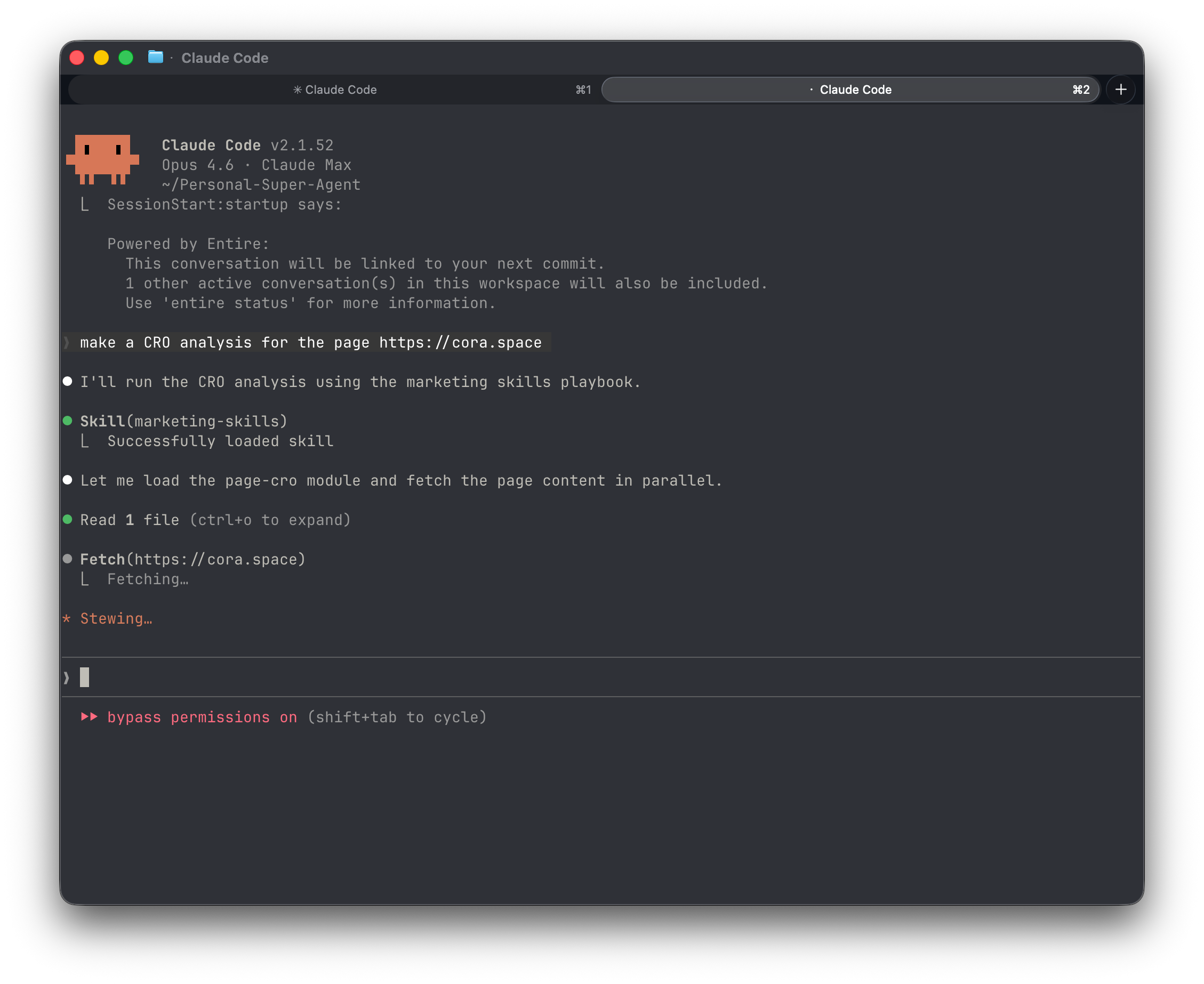
Twenty minutes later I have a structured report with specific recommendations, copy alternatives, and a list of things to A/B test. Not because the AI is brilliant. Because it has a skill installed that knows how CRO works, and it applied that skill to my specific situation.


That’s vibe marketing.
Not “write me a tagline.” Not “brainstorm 10 ideas.” Not the copy-paste loop that most marketers are stuck in with ChatGPT. An agent that understands a marketing discipline, knows your context, and runs a real workflow.
The term came from Andrej Karpathy’s “vibe coding.” Describe what you want, the machine handles execution. In software, this turned non-programmers into people who ship products. In marketing, the same shift is happening. But most marketers don’t see it yet because they’re still using AI like a search engine with a personality.
Skills, not prompts. This distinction changes everything.
Here’s the thing that made the whole concept click for me.
A prompt is a one-shot instruction. You type “write me an email sequence,” get some output, close the window. The AI forgets everything the moment you leave. Next time you ask, you’re explaining your product from scratch. Your audience from scratch. Your brand voice from scratch. Every. Single. Time.
A skill is something else entirely. It’s a structured knowledge module that lives inside the agent. It contains frameworks, methodology, cross-references to other skills, and a workflow that unfolds step by step. When the agent has a marketing skill installed, it doesn’t just respond to your request. It recognizes what type of marketing work you’re doing and applies the right approach automatically.
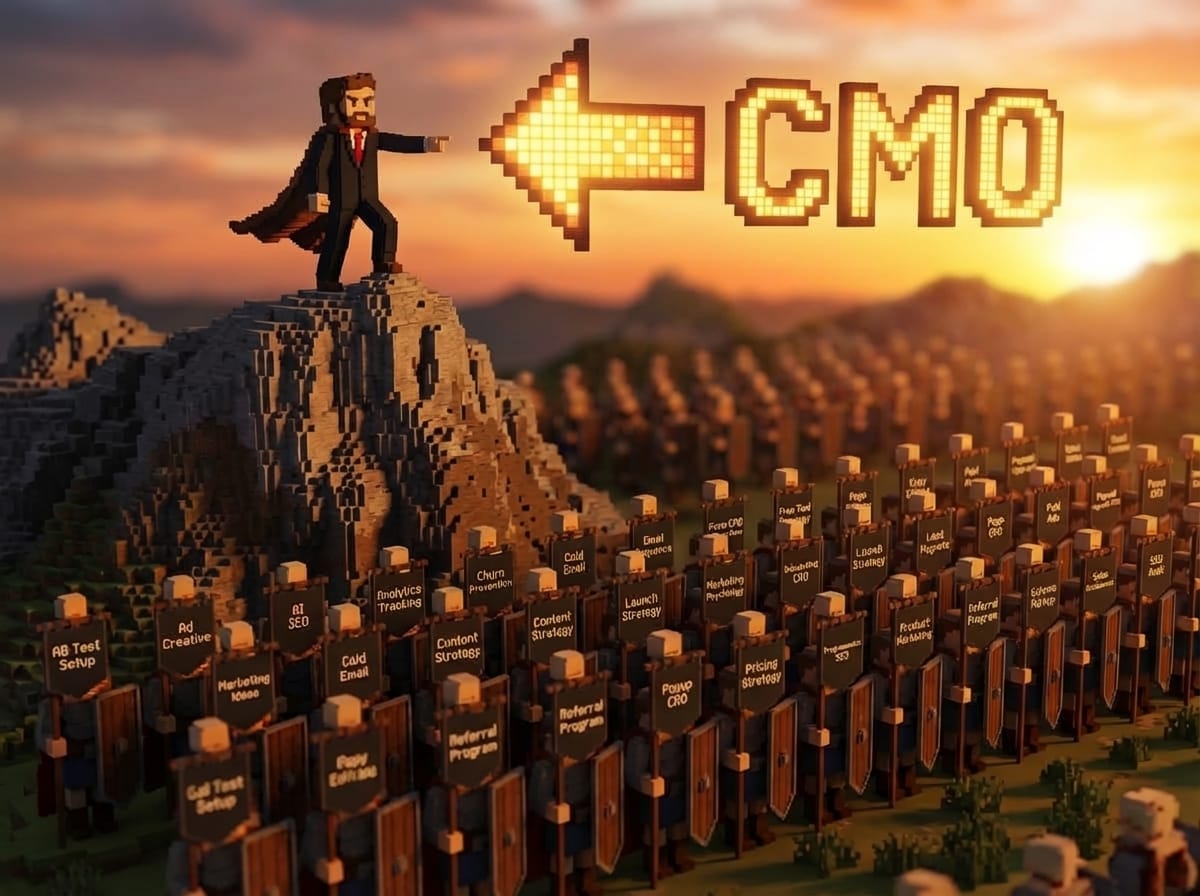
A developer and marketer named Corey Haines published an open-source collection of over 35 marketing skills on GitHub. Not prompts. Skills. CRO analysis. SEO audits. Email sequences. Cold outreach. Pricing strategy. A/B test design. Launch playbooks. Schema markup. Churn prevention. Content strategy. Ad creative generation. Sales enablement. RevOps pipeline design.
And they connect to each other. The copywriting skill knows about CRO. CRO links to A/B testing. A/B testing references analytics tracking. It’s a system, not a folder of templates.
There’s also a foundation layer called product-marketing-context. It’s the first thing every other skill checks. It stores your product description, your ICP, your positioning, your competitive landscape. So when you run any skill, it already knows who you are and what you sell.
You ask your Claude to install these skills. One command. That’s it. Your agent just absorbed more structured marketing knowledge than most junior marketers learn in their first two years.
Nobody is getting replaced. Let’s stop pretending that’s the story.
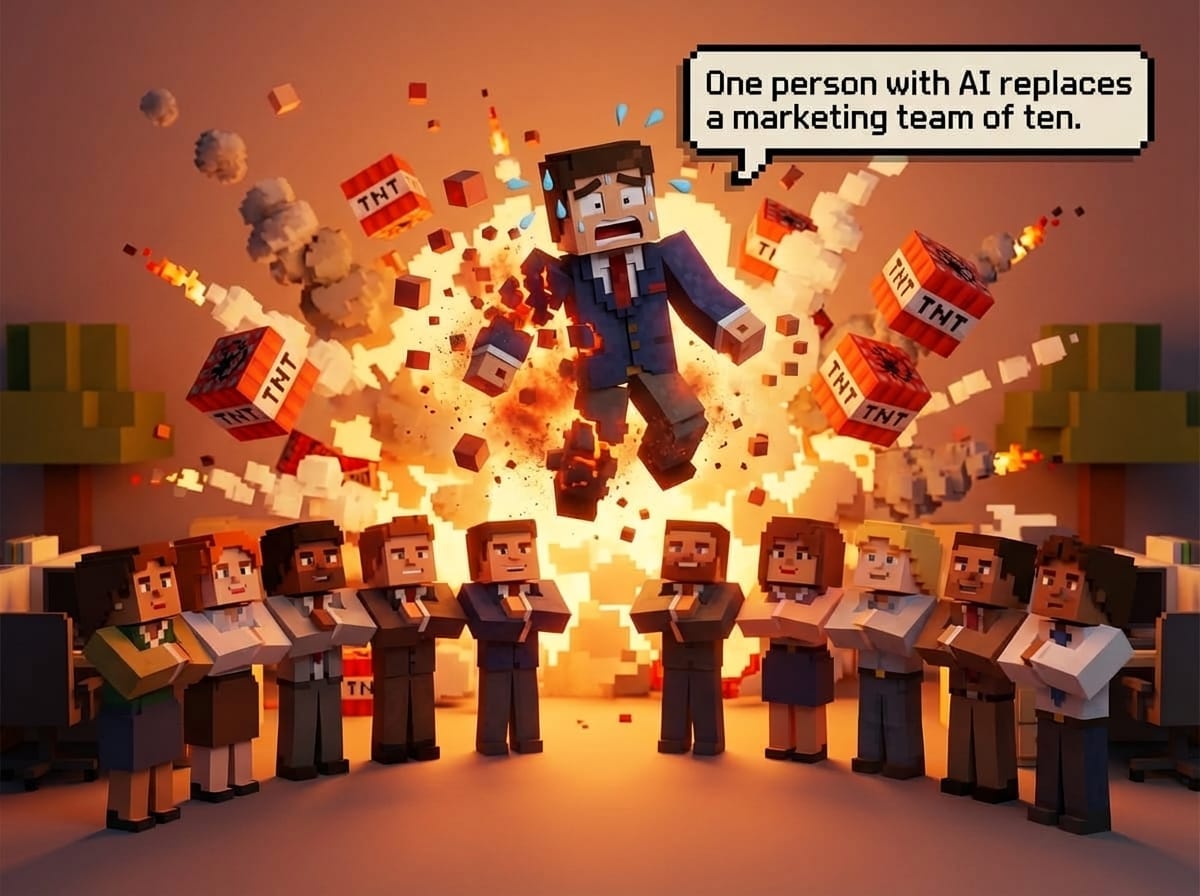
I need to address this because the LinkedIn crowd won’t stop with it. “One person with AI replaces a marketing team of ten.” I’ve seen the posts. I’ve seen the engagement. And I think it’s wrong. More than that, I think it hurts adoption because it scares the exact people who would benefit most.
Here’s what’s actually happening. And it’s more interesting than the replacement fantasy.
Each person on a marketing team can now work with dramatically more reach. Not because the AI does their thinking. Because the AI handles the framework, and they bring the judgment.
Your SEO specialist still needs to make strategic calls. But instead of spending three days manually crawling a site, they run an seo-audit skill. The agent produces a structured report in twenty minutes. The specialist’s job shifts from running the audit to interpreting results and deciding what actually matters for the business.
Your copywriter still brings voice and cultural context that no model can replicate. But instead of starting from a blank page, the copywriting skill provides frameworks for headlines, CTAs, value propositions. All calibrated to your brand. The copywriter’s time goes from raw generation to sharpening, directing, making it sound like a human who gives a damn.
Your growth lead still decides which channels to test. But the marketing-ideas skill surfaces tactics filtered by product type, stage, and audience. The lead applies judgment about what fits the team’s capacity and budget.
Same team. Same headcount. Different output. That’s what vibe marketing changes in practice. Not the org chart. The throughput.
ChatGPT is the wrong tool for this
I want to say this directly because I know where most marketers live. They live in ChatGPT. And for what they use it for, it works fine.
ChatGPT is a great reference. You ask, you get an answer. Quick research. Brainstorming. A rough draft when inspiration is dead. It does that job.
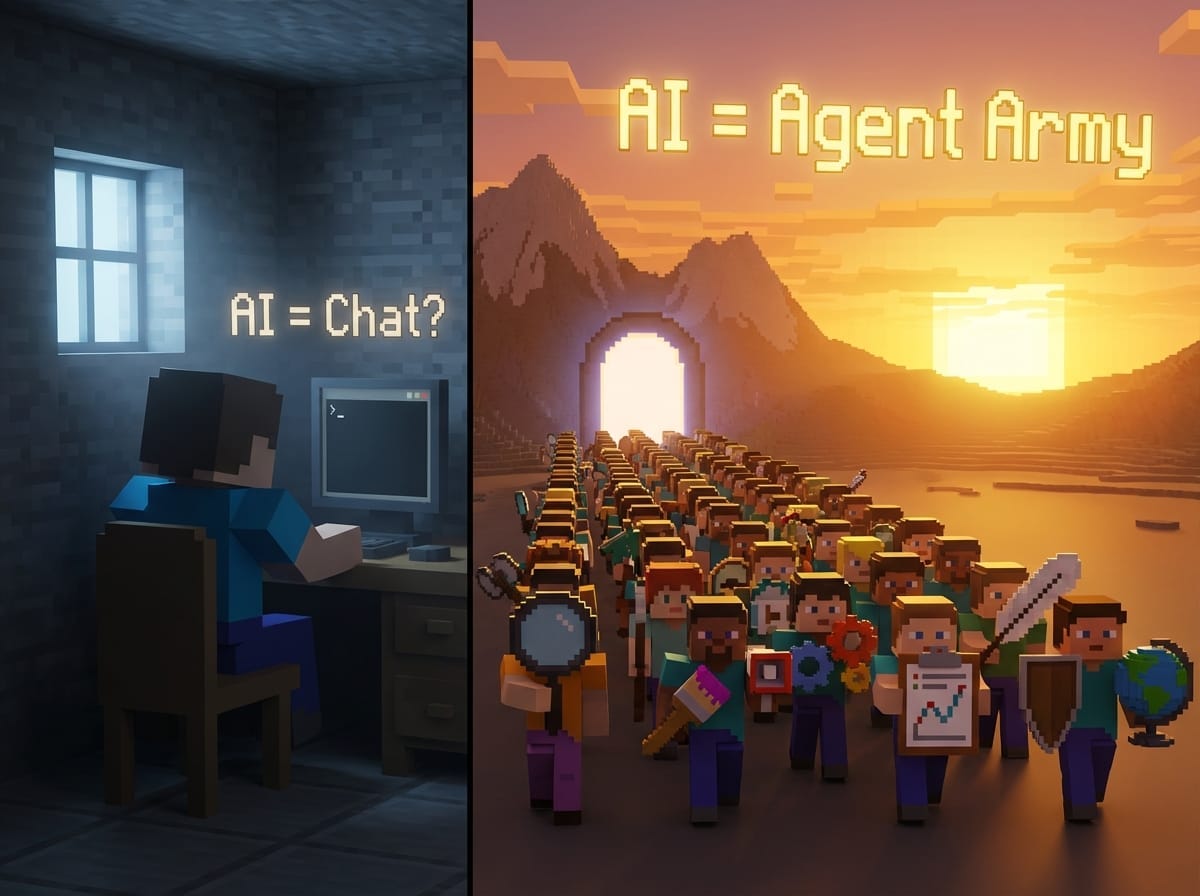
But vibe marketing needs something ChatGPT isn’t built for. An agent. Something that reads your files. Runs multi-step workflows. Installs skills. Connects to your analytics, your CRM, your CMS. Remembers what you told it last week. Executes without you holding its hand through every click.
Right now, Claude is where this happens. Claude Code for people who aren’t afraid of a terminal. Claude console for everyone else. Both support skills. Both run complex marketing workflows. Both maintain context.
If you want full control, there’s OpenClaw. Open-source. Runs Claude as a persistent agent on your machine. Channels for different workstreams, scheduled tasks, memory that carries across sessions. I use it daily. It changed how I think about what a “marketing tool” even means. But that’s a deeper dive for another post.

The point is: if you’re doing the copy-paste loop in ChatGPT and calling it “AI-powered marketing,” you’re leaving the actual capability untouched. The AI that can do real marketing work exists. It just doesn’t live where you think it lives.
How to start. Actually start.
If you’ve never touched a coding agent, if the word “terminal” gives you anxiety, go to codingformarketers.com. Corey Haines built it for exactly this situation. A step-by-step guide for non-technical marketers learning to work with AI agents. How to open a terminal. How to control what the agent does. How to review its work and build confidence without breaking anything.
The mental shift the site teaches matters more than any specific tool: stop asking “what can I build?” and start asking “what can I delegate?”
If you already use Claude, your next step takes five minutes. Ask your Claude to install the marketing skills from the GitHub repository. Let it set things up. Then pick one skill that matches your most painful current task and run it against a real project.
Not a test. Not a hypothetical. Something you’d normally spend hours on.
Pay attention to what it produces. Some of it will be good. Some will miss the mark. That gap between the skill’s output and what you’d actually ship? That’s your expertise. The skill handles the framework. You bring the taste.
The window is still open
I’m not going to pretend that installing 35 marketing skills makes your Claude a CMO overnight. It doesn’t. What it does is give you something to test. A way to feel what vibe marketing is in practice, not in a LinkedIn post.
From what I’ve seen over months of daily use, the people who start building this muscle now will have a real advantage. Not because the technology is magic. Because most marketers still treat AI like a search bar, and anyone who treats it like a coworker operates at a different speed.
The skills are free. The tools are available. The learning resources exist. The only question is whether you start now, while most of your competitors are still copy-pasting ChatGPT outputs into Google Docs, or wait until this becomes standard practice and the window closes.
I’d start now. Today. Pick one skill. Run it. See what your Tuesday looks like after.