

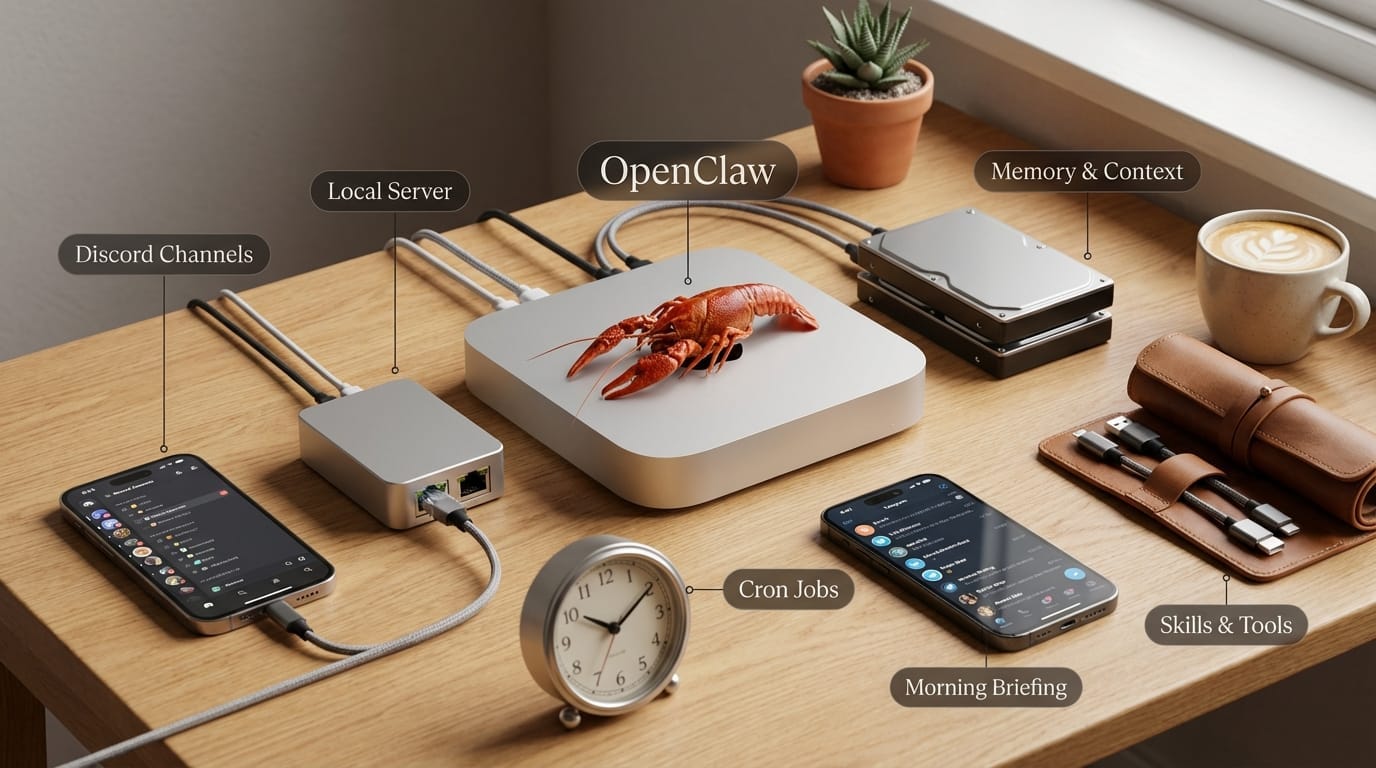
Most people interact with AI the same way they use Google: open a tab, type a question, get an answer, close it. The difference is Google was never marketed as your personal assistant. ChatGPT was. And yet the architecture is identical — stateless, contextless, amnesiac by design. Every session you start, you’re explaining yourself to a stranger who has never heard of you.
I got tired of that about two months ago and decided to build something different. What I ended up with is a local setup I call Personal Super Agent — a folder on my home server with config files, skill scripts, memory files, and a scheduling system. The orchestration layer is an open-source tool called OpenClaw, which handles routing, context, and channel management. The interface is Discord, which I was already using for everything else anyway.
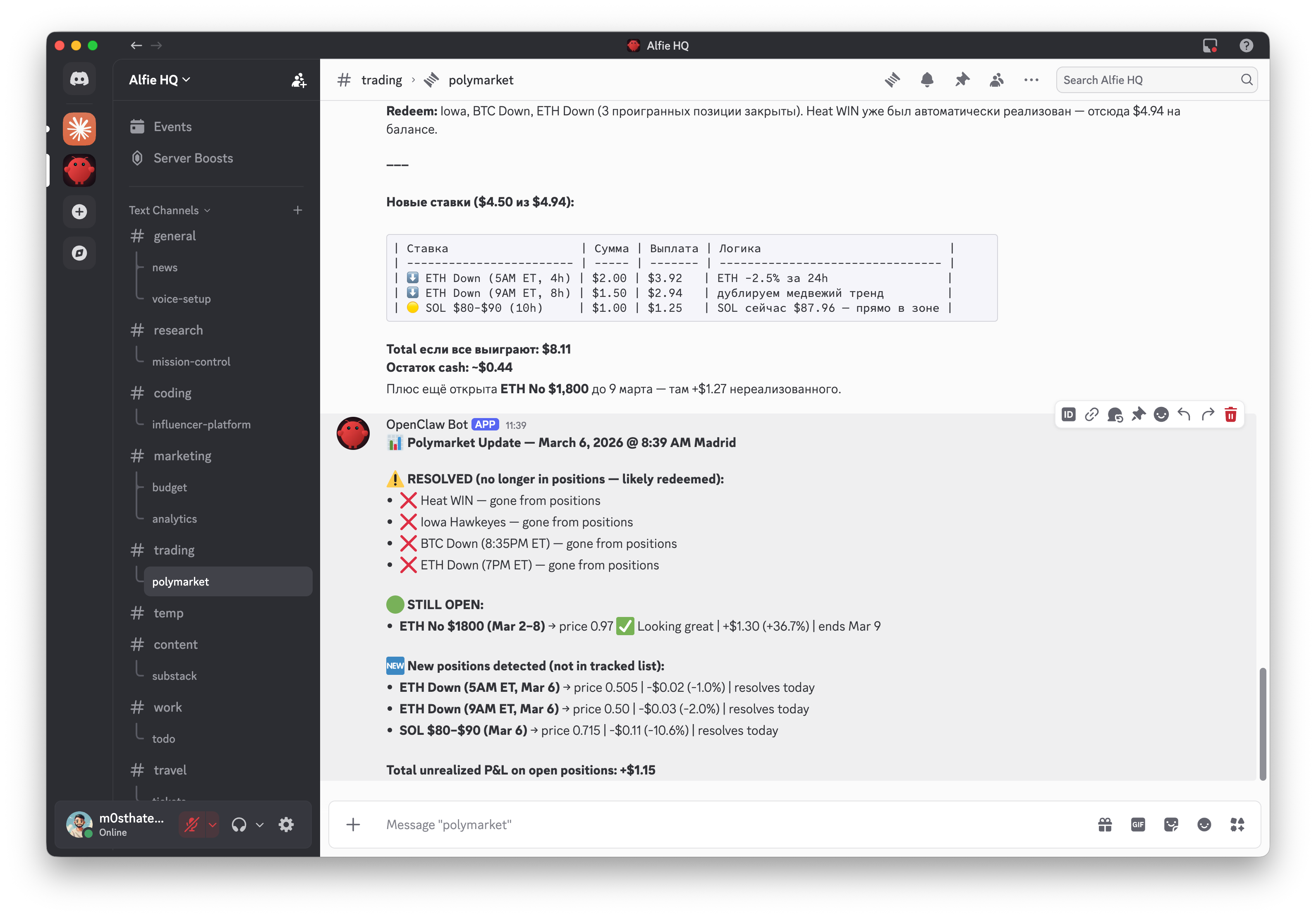
The way it actually works day-to-day: I have a Discord server with channels for different areas of work — content, trading research, projects, ops. Each channel is its own persistent session. When I open #substack, the agent knows we’ve been discussing blog topics. When I switch to #trading, it knows about positions and market research. Context doesn’t bleed between channels, and nothing resets. This morning it suggested this post topic on its own, based on what we built yesterday. I didn’t ask. That’s the whole point.
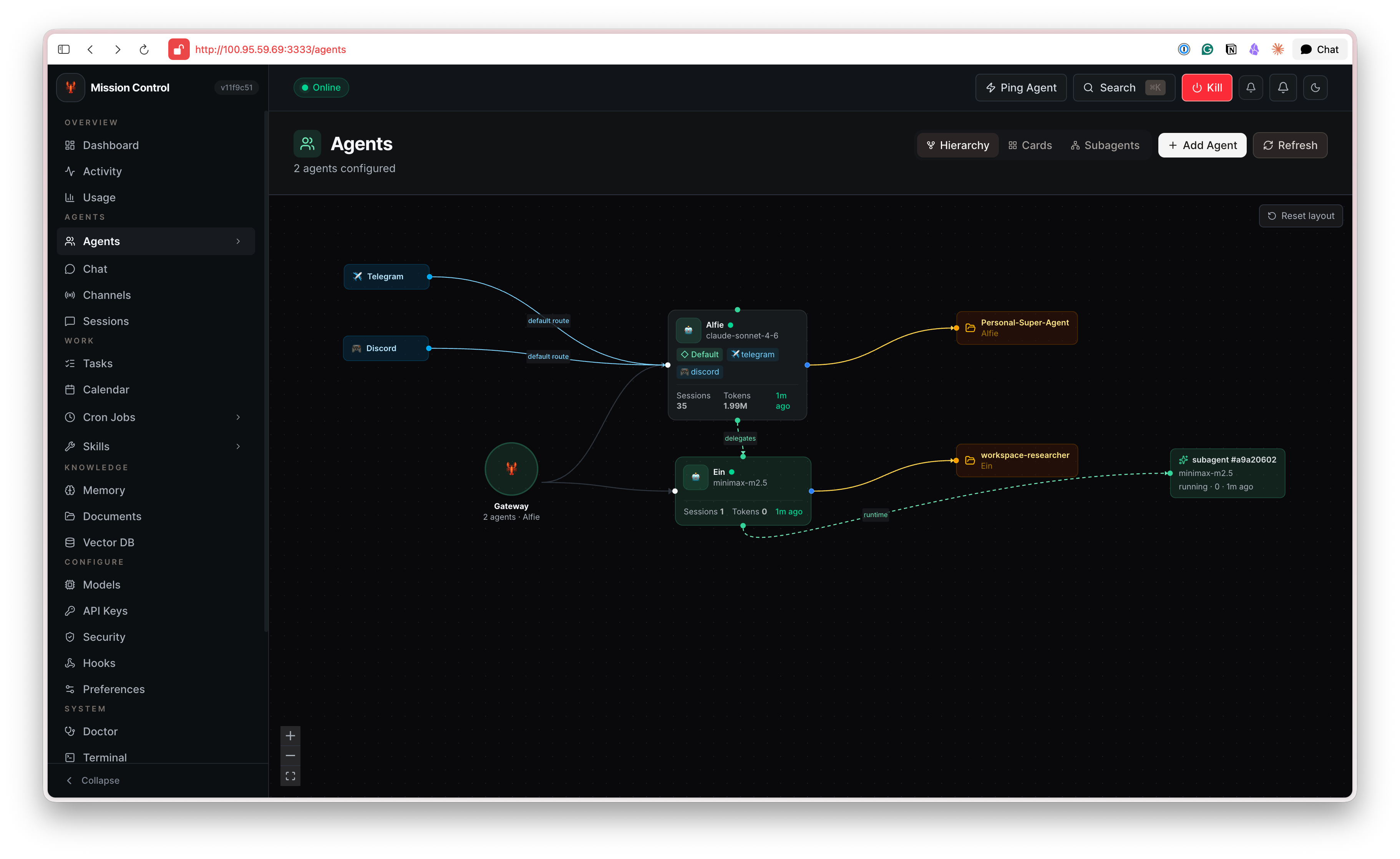
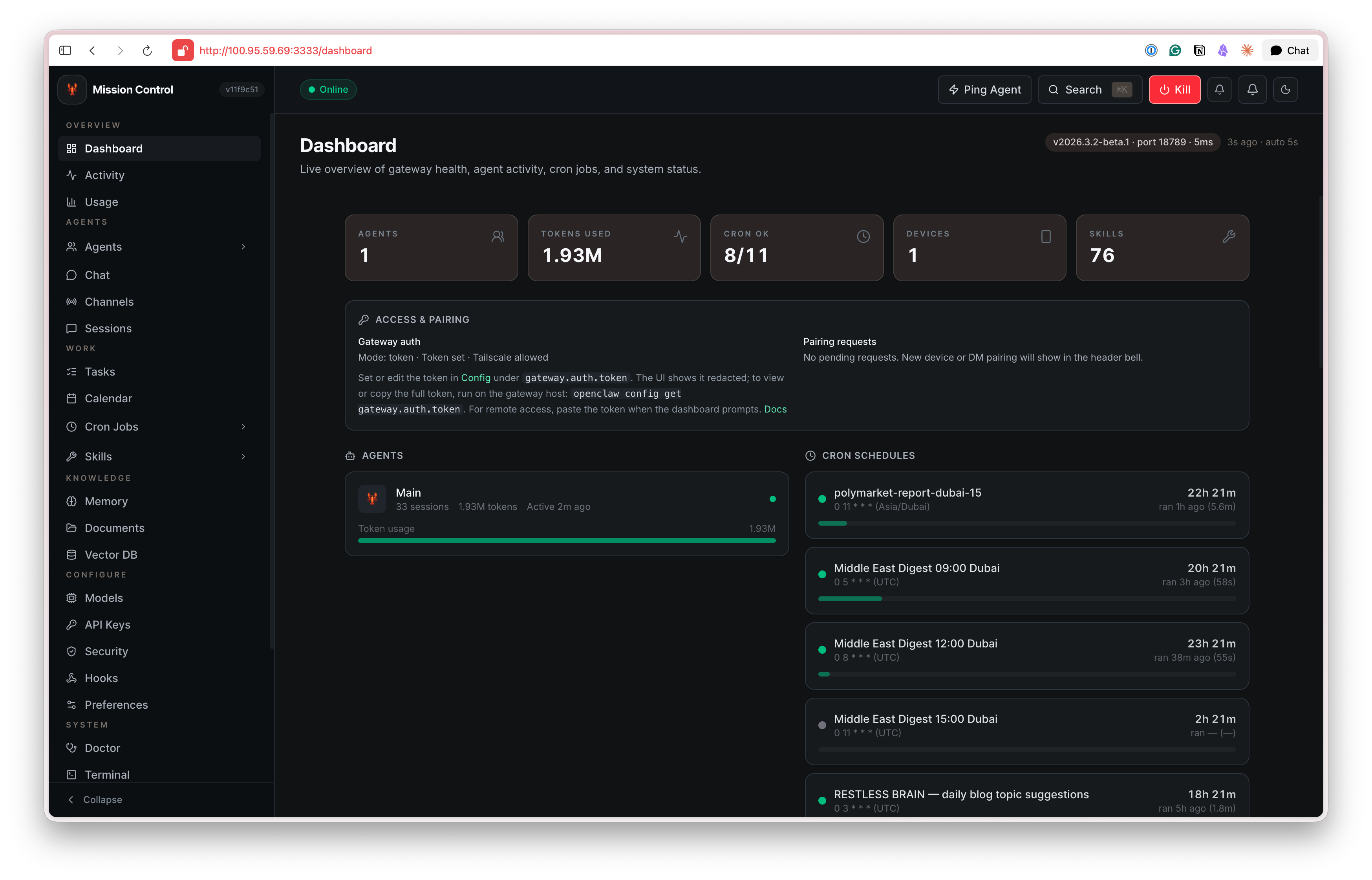
The server runs cron jobs on a schedule. At 7am Dubai time every morning, one of them pulls my calendar, emails, and recent work logs, then posts a briefing to my Telegram. Another one — the one that triggered this post — reviews yesterday’s activity and suggests five content ideas at the same time. There’s also a mission control channel where I can see the state of everything: which jobs ran, what they produced, where something failed. It’s not a polished dashboard, but it tells me what I need to know.
The stack itself is unremarkable. OpenClaw for orchestration, a Linux server for persistence, Discord as the main interface, Python scripts for specialized tasks like image generation or web search. Nothing exotic. The interesting part isn’t the technology, it’s the decision to treat the AI like infrastructure rather than a tool you visit.
That shift — from tab to persistent system — changes what’s possible. An AI that lives somewhere accumulates. It knows what you decided last week, what you’re working on right now, what your voice sounds like, what you care about. An AI in a tab knows none of that, no matter how good the model is. The gap between them isn’t a feature gap. It’s an architectural one.
At last someone look at it from architectural POV ) Good idea. Again )