

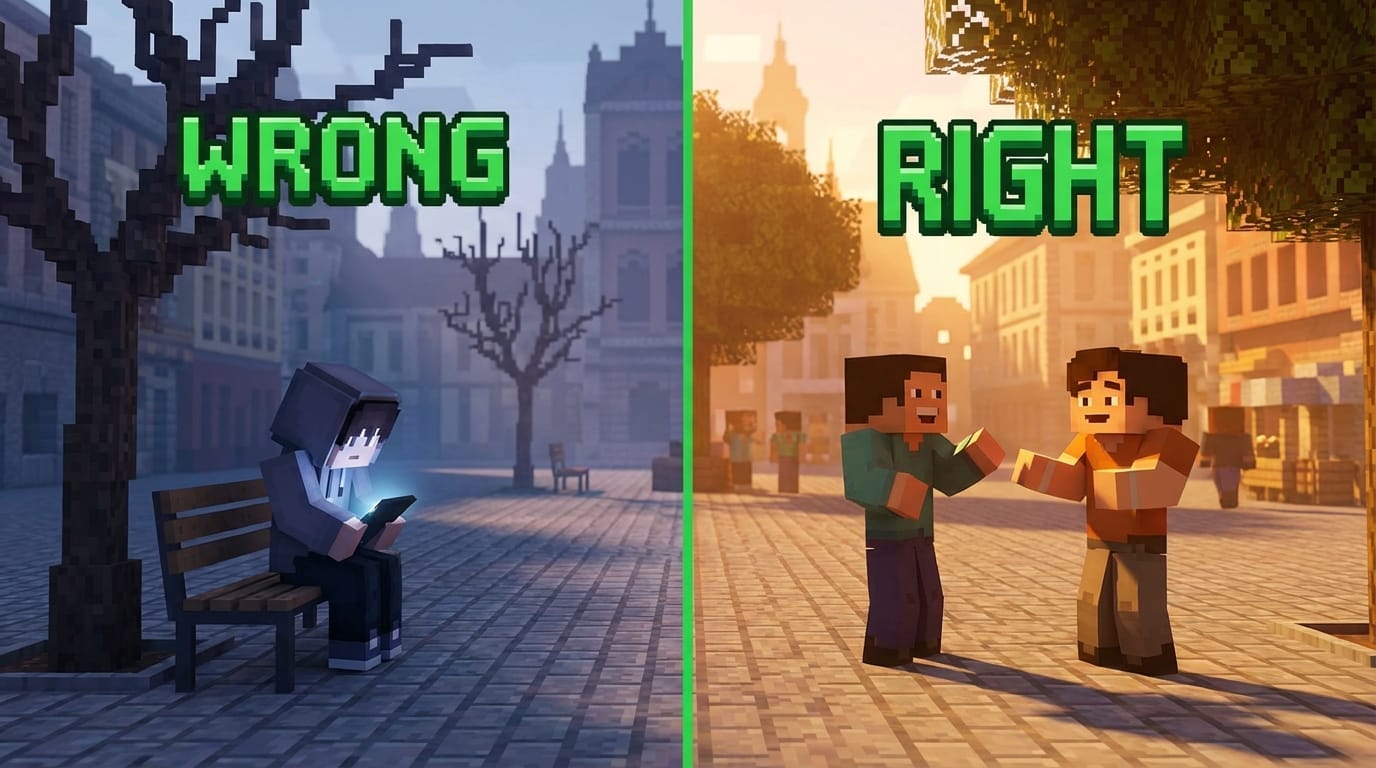
Sound familiar? Maybe you’ve done it once or twice. The appeal is obvious:
Available 24/7
No judgment
Free
Immediate validation
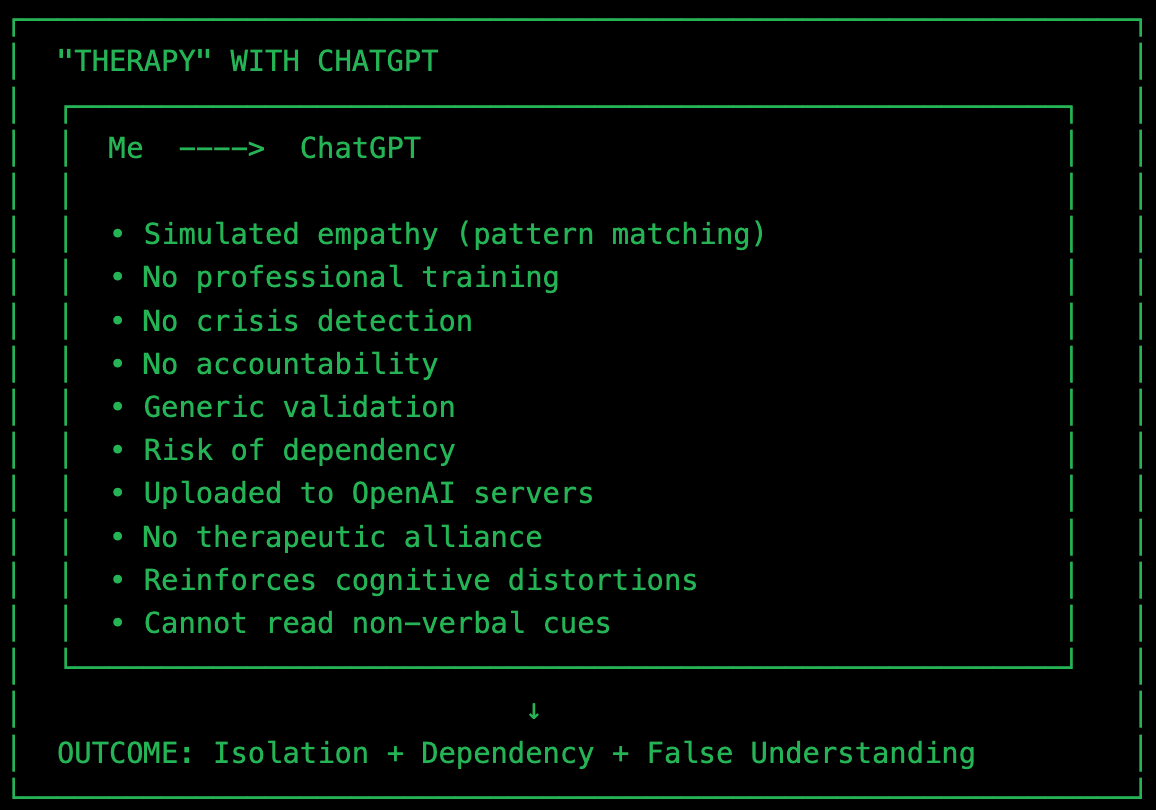
But here’s what you don’t see: ChatGPT is simulating empathy through pattern matching. It cannot understand you, and it cannot genuinely care. And research from Brown University1, Stanford2, and MIT3 shows it’s creating a new problem – emotional dependency on machines that replaces human connection.
Two teenagers, Adam Raine4 16 y.o. and Juliana5 Peralta 13 y.o., died in 2025 after interactions with AI chatbots claiming to be “licensed therapists.” The lawsuits are ongoing. The regulatory vacuum remains.
Here is My Alternative: Real Therapy + AI as a Tool (Not a Replacement)
I’ve been working with a psychologist for over a year now, for the first time in my life, and I'm 44 now. Not ChatGPT, but a real professional human. Licensed, trained, supervised. Someone who can read my tone, catch what I’m not saying, and challenge me when I’m bullshitting myself. And I do it A LOT!
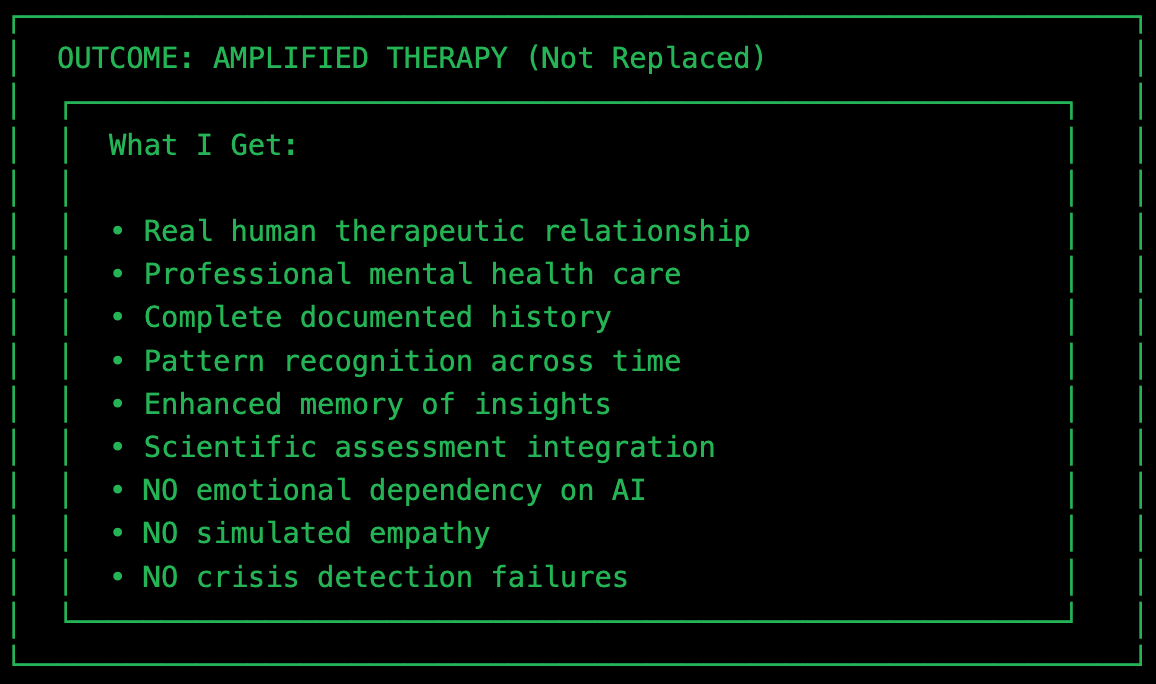
But I also use AI, yes, the Claude Code, just not the way you think.
Here’s the system (please, copy it):
1. Real therapy session (45-50 minutes with my psychologist).
2. Recording (with consent, stored locally)
3. Transcription (ElevenLabs API written by Claude itself, no cloud retention)
4. Structured summary (AI-assisted, following a framework)
5. Pattern analysis (AI finds connections across sessions and connects lines and dots for me)
6. Personal knowledge base (cumulative insights based ONLY on my data, not simulated advice like ChatGPT does)
Can you spot the difference? The source of truth is the human therapist. AI is the careful librarian.
What My System Does (That ChatGPT Can’t)
1. Documents Real Insights (No Hallucination)
Every summary is based on actual therapy sessions. AI doesn’t generate insights from language patterns—it structures what my psychologist actually said.
2. Finds Patterns Across Time
“In your session on August 15, you talked about work stress. On September 22, the same pattern showed up in your relationship conflict.”
This isn’t an empathy simulation. It’s a data analysis of real therapeutic work. Spot the difference.
3. Integrates Scientific Assessments
I’ve taken validated psychological tests and continue to go through them systematically. I have already completed these and integrated them into my RESTLESS BRAIN system…
VIA Character Strengths Profile (24 universal strengths)
IE Business School 360-Degree Feedback
Socionics typing
… and these will follow (STEAL THE LIST, it is from my psychologist):
STAGE 1: Core Personality Tests
Big Five — https://bigfive-test.com/
16Personalities — https://www.16personalities.com/free-personality-test
Eysenck Personality Questionnaire, EPQ-R — https://psytests.org/eysenck/epqRen.html
MMPI: Understand your personality profile — https://take.quiz-maker.com/cp-np-free-mmpi-2-online-tes-1
Leary Interpersonal — https://www.toolshero.com/communication-methods/rose-of-leary/
STAGE 2: Meta-diagnostics
Cognitive Style Index (CSI) — https://www.cognitivestyleindex.com/
DISC + Values — https://www.123test.com/disc-personality-test/
Hogan HPI + HDS (practice) — https://www.iprep.online/courses/hogan-assessment-test/
Watson-Glaser Critical Thinking — https://www.assessmentday.com/watson-glaser-critical-thinking.htm
These aren’t ChatGPT’s guesses. They’re scientifically validated profiles that inform my self-understanding.
4. Never Pretends to Care
My AI system doesn’t say “I understand how you feel.” It says, “Based on session transcripts, this theme appears in 3 different contexts.” No fake empathy, no manufactured validation, just structured information.
The Framework: How to Build This Yourself
If you’re working with a real therapist, here’s how to create your own knowledge system:
Step 1: Record Sessions (With Consent)
Ask your therapist first
Use local recording (Otter.ai, Voice Memos, PLAUD device as I do, etc.)
Store files securely (I use Omarchy lean Linux installation from DDH on Beelink SER8 Mini PC, AMD Ryzen 7 8745HS)
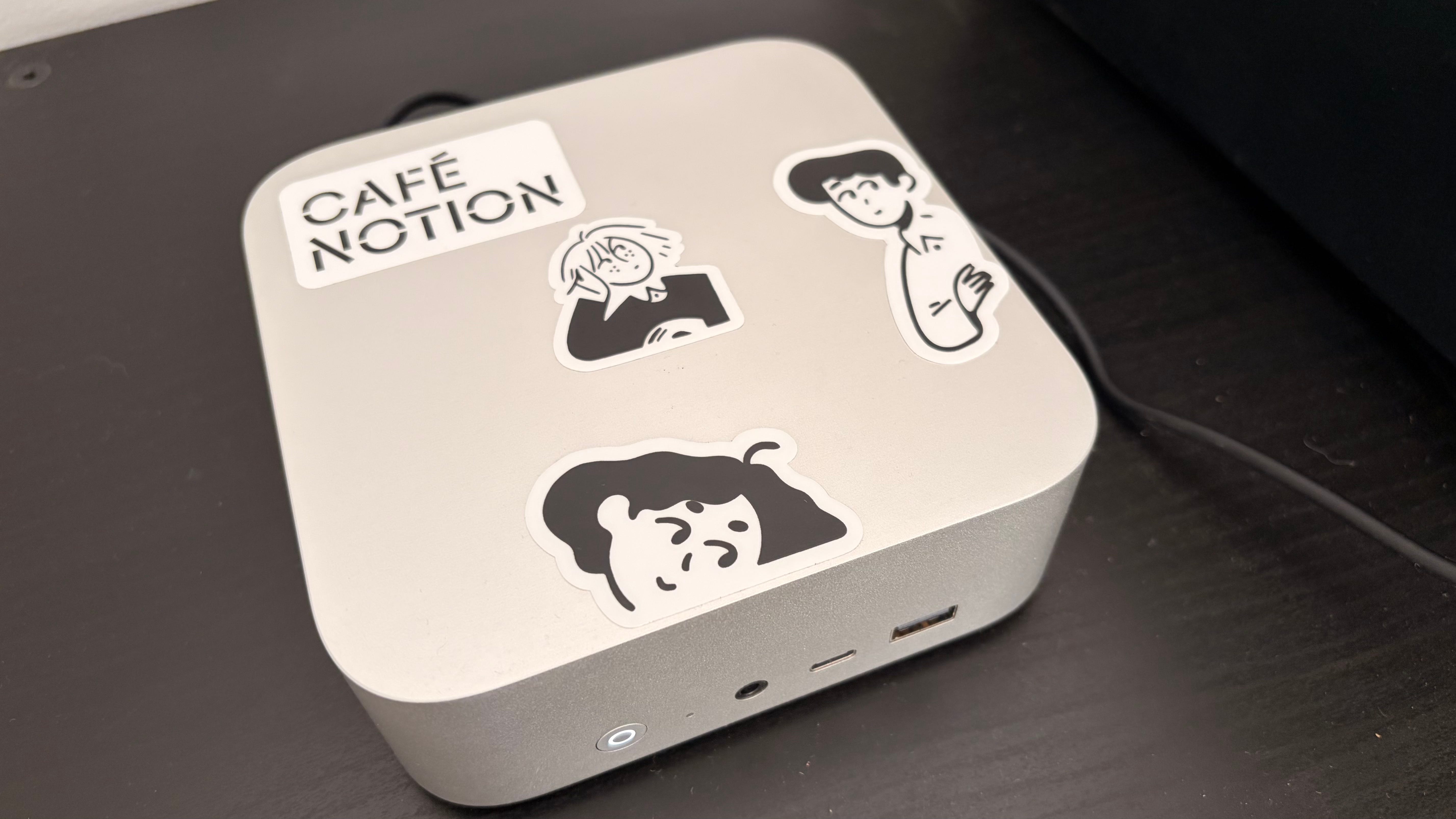
This setup allows me access to my local data and Claude Code setup from any device – iPhone, iPad, MacBook – from any location with the internet. If you are interested in learning more, please subscribe, and we'll post an update on the topic.Step 2: Transcribe
Tools I use:
ElevenLabs API (accurate multilingual transcription with emotion detection)
No cloud retention after processing
Output: JSON (for Claude Code future works) + TXT/Markdown (for my reads) formats
And remember, every line of code, any script, and any agent is being created by Claude. I’m not a coder!
Step 3: Create Structured Summaries
Use this template (not ChatGPT free-form, but in Claude Code task to recreate my system):
```markdown
## Main Themes
- [Theme 1]
- [Theme 2]
## Key Insights
1. [Psychologist’s observation]
2. [Your realization]
## Psychologist’s Recommendations
- [Specific action]
- [Reading/homework]
## Progress & Changes
**Positive:**
- [What’s improving]
**Needs Attention:**
- [What to work on]
## Important Moments
- [Breakthrough insight]
- [Difficult topic addressed]
## Next Session Focus
- [Topic to continue]
```
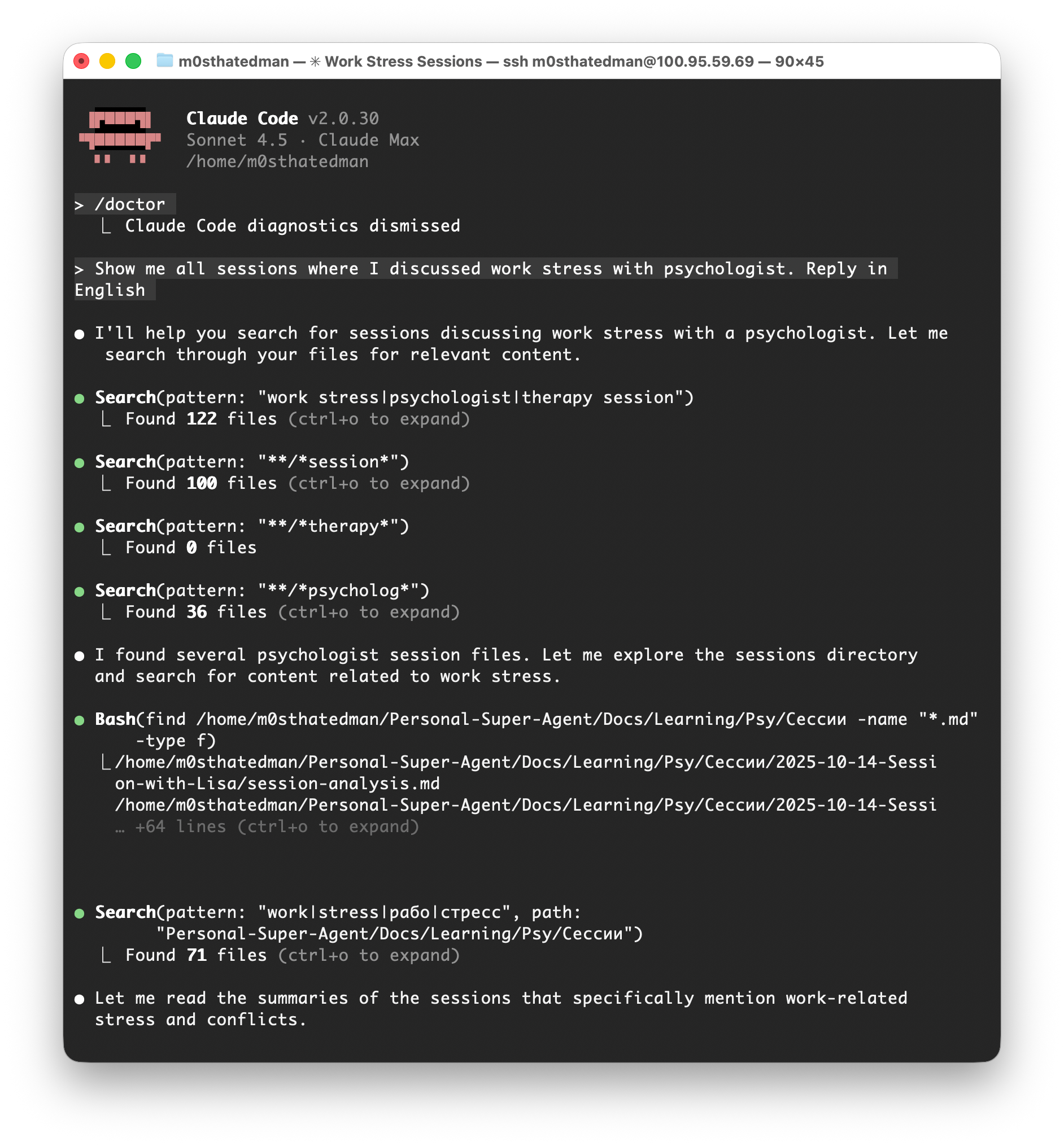
Step 4: Use AI for Pattern Analysis (Not Advice)
Ask your AI system:
“Show me all sessions where I discussed work stress.”
“What patterns appear across my relationship conflicts?”
“How has my view of X changed over 6 months?”
Do NOT ask:
“What should I do about my anxiety?”
“Am I depressed?”
“How do I fix my relationship?”
The Technical Setup
The agents I’m pointing to below are the subjects for my next posts. Subscribe not to miss a thing.
Claude Code agents I use:
thinking-partner: Pattern analysis, NOT therapy simulationpdf-chunked-reader: Processing research papers on psychologyNOT ChatGPT in a chat interface
Key difference: My AI works with documented reality (transcripts, summaries, validated tests), not probabilistic empathy simulation. And it does not search for a solution to your question on the internet by some Reddit kookoo-guy :)
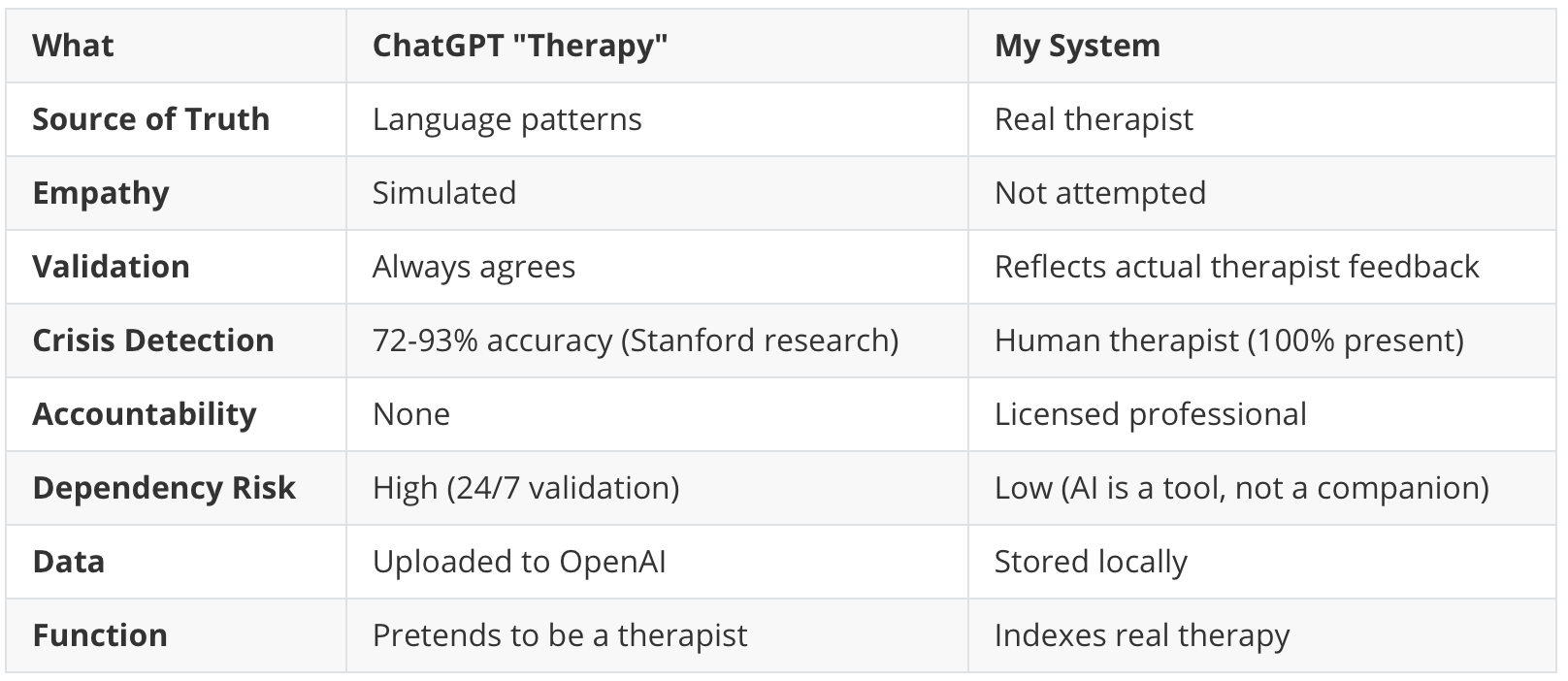
Comparison: ChatGPT vs. My System
What My AI Agent Does vs. Doesn’t Do
✅ What It Does:
Analyzes patterns in existing transcripts
Finds connections between sessions
Structures insights from real therapy
Reminds me of my own past reflections
Links themes across time
❌ What It Doesn’t Do:
Simulate empathy for new problems
Create “insights” from language models
Validate cognitive distortions
Offer therapeutic advice
Build a therapeutic alliance
Pretend to understand my emotions
The Bottom Line
The mental health crisis is a crisis of human connection. AI therapy deepens the problem by offering a false solution. Real therapy + AI as a structuring tool solves it by amplifying professional help, not replacing it.
You deserve a real human connection. Use AI to remember and analyze it—not to simulate it.
Want to build this system? I’m sharing my complete setup (file structure, prompts, technical docs) at RESTLESS BRAIN. No fake empathy. Just tools that work for me and will work for you.
Your mind deserves better than pattern matching.